Private Candidate IGCSE Explained: A Step-by-Step Guide for Parents
Introduction
Alternative education is no longer unusual. Homeschooling is rising. Hybrid schooling is common. Students are customizing their academic journeys more than ever before.
But when it comes to exams, many parents pause.
Stepping outside the traditional school system to register for IGCSE independently can feel daunting. Forms. Deadlines. Fees. Exam centres. It’s unfamiliar territory.
Here’s the reassurance: thousands of students successfully take this route every year, and earn the exact same internationally recognized qualification.
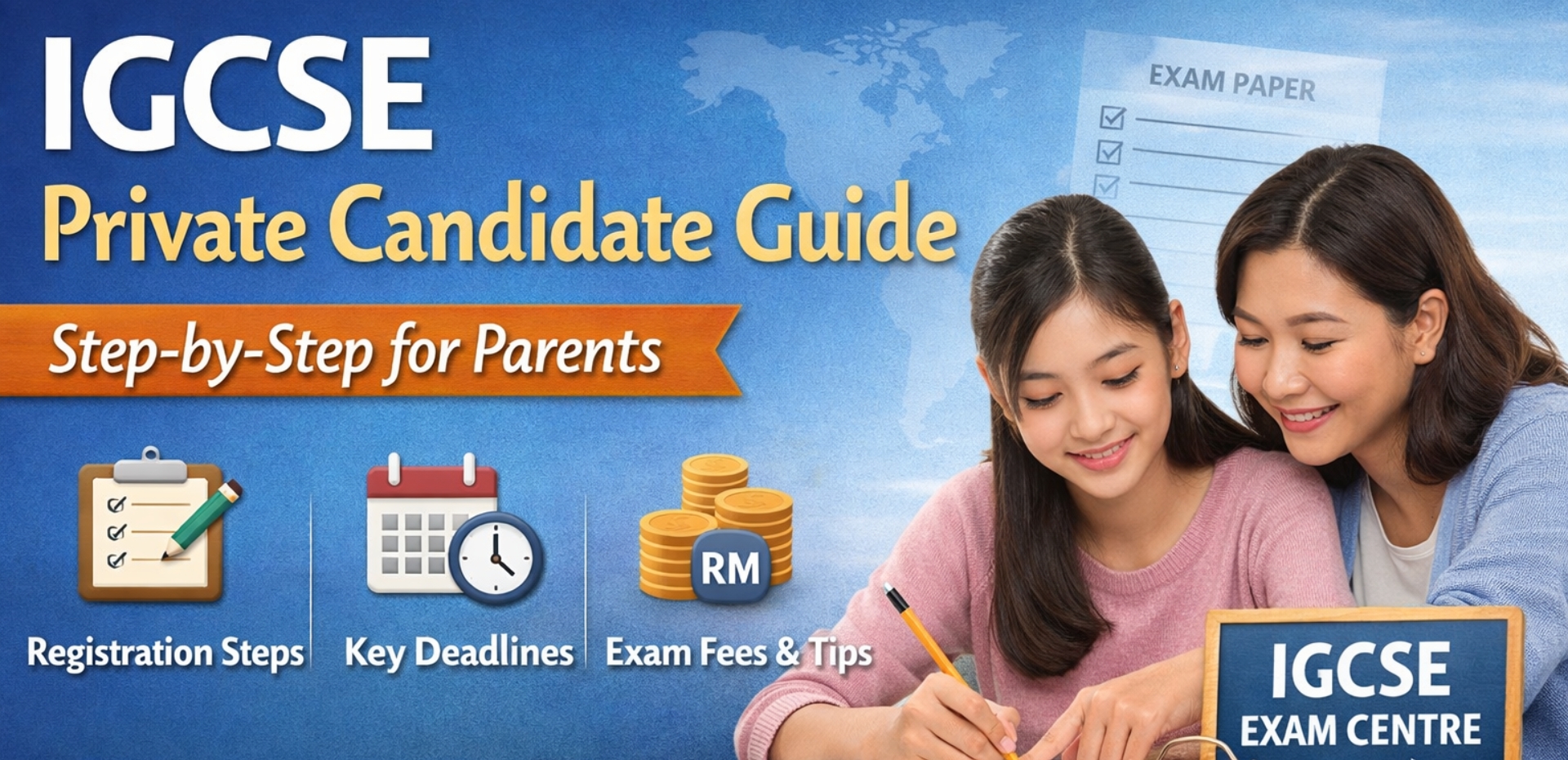
If your child is taking the route of a Private Candidate for IGCSE, this guide is for you. We’ll demystify the process, break down actionable steps, and give you peace of mind.
What Does It Mean to Be an IGCSE Private Candidate?
A private (or external) candidate is a student who registers directly with an approved exam centre instead of being enrolled in that centre as a school student.
In simple terms: your child studies independently (or through tuition/homeschooling) and sits for the exams at a registered centre.
Who Is This Route For?
- Homeschoolers
- Students adding extra subjects not offered at their school
- Students retaking exams to improve grades
- National curriculum students seeking additional international qualifications
Major exam boards such as Cambridge CAIE, Pearson Edexcel, and Oxford AQA all allow private candidates. Most importantly, the certificate issued is identical to one earned by a school-enrolled student.
There is no “private candidate” label on the certificate.
The Step-by-Step Guide to the IGCSE Private Candidate Journey
Step 1: Selecting Subjects and Examining Boards
Start with the end in mind.
What does your child plan to pursue after IGCSE? A-Levels? Foundation? Medicine? Engineering?
Core subjects like Mathematics, English, and Sciences are often essential.
Important note: Subjects with coursework or practical components (e.g., Art & Design or certain lab-based sciences) may be restricted for private candidates unless the centre provides facilities. In many cases, students opt for “Alternative to Practical” science papers.
Always download the exact syllabus for your exam year directly from the board’s website.
Step 2: Locating a Registered Exam Centre
Use official “Find a Centre” tools on the Cambridge or Edexcel websites.
In Malaysia, options may include the British Council or private schools that accept private entries.
When contacting centres, ask:
- Do you accept private candidates?
- Do you offer my subject combination?
- Are there facilities for practical exams?
- What are your deadlines?
Start this process at least six months before the exam series.
Step 3: Understanding Timelines and Deadlines
There are two main IGCSE exam series each year:
- May/June
- October/November
Registration typically closes 2–3 months before exams begin. Late entries incur additional fees.
For example, if targeting the May/June session, begin searching for centres by November or December the previous year.
Early planning avoids stress.
Step 4: The Registration Process & Fees
Documents typically required:
- Valid ID or passport
- Passport-sized photos
- Previous statement of results (if retaking subjects)
Costs include:
- Exam board fee (approx. £50–£200 per subject)
- Exam centre administrative fee
In Malaysia, the total can range roughly between RM500–RM2000 per subject, depending on the board and centre.
Always request a full fee breakdown before confirming registration.
How to Prepare Your Child for IGCSE Success at Home
Acquire the Exact Syllabus
Download the correct syllabus code and year. This ensures your study materials match the exam format precisely.
Study Materials
- Board-endorsed textbooks
- Online learning platforms
- YouTube subject channels
- Most importantly: Past Papers and Mark Schemes
Past papers are the gold standard. Practice using examiner reports to understand common mistakes.
Build a Support System
Independent study works for disciplined learners. Others may benefit from hiring subject-specific tutors, especially for Mathematics and Sciences.
Structured guidance reduces overwhelm.
Exam Day Logistics: A Parent’s Checklist
What to Bring
- Statement of Entry
- Valid ID
- Transparent pencil case
- Approved calculator
What NOT to Bring
- Phones
- Smartwatches
- Unauthorized notes
Encourage consistent sleep and light revision, not last-minute cramming, during exam weeks.
Your role shifts from organiser to emotional anchor.
Receiving and Understanding IGCSE Results
Results are typically released around six weeks after exams (August for May/June series). Private candidates receive login credentials through their exam centre.
Physical certificates usually arrive 2–3 months later.
From here, students can progress to A-Levels, IB, foundation programmes, or diploma courses.
Conclusion
Taking the private candidate route may feel unfamiliar, but it is entirely legitimate, flexible, and globally recognized.
Thousands of students navigate this path successfully every year.
Bookmark this guide. Share it with your homeschooling community. And if helpful, download a printable IGCSE Registration Checklist to stay organized.
Because stepping outside the system doesn’t mean stepping into uncertainty.
It simply means choosing your own path, with clarity.