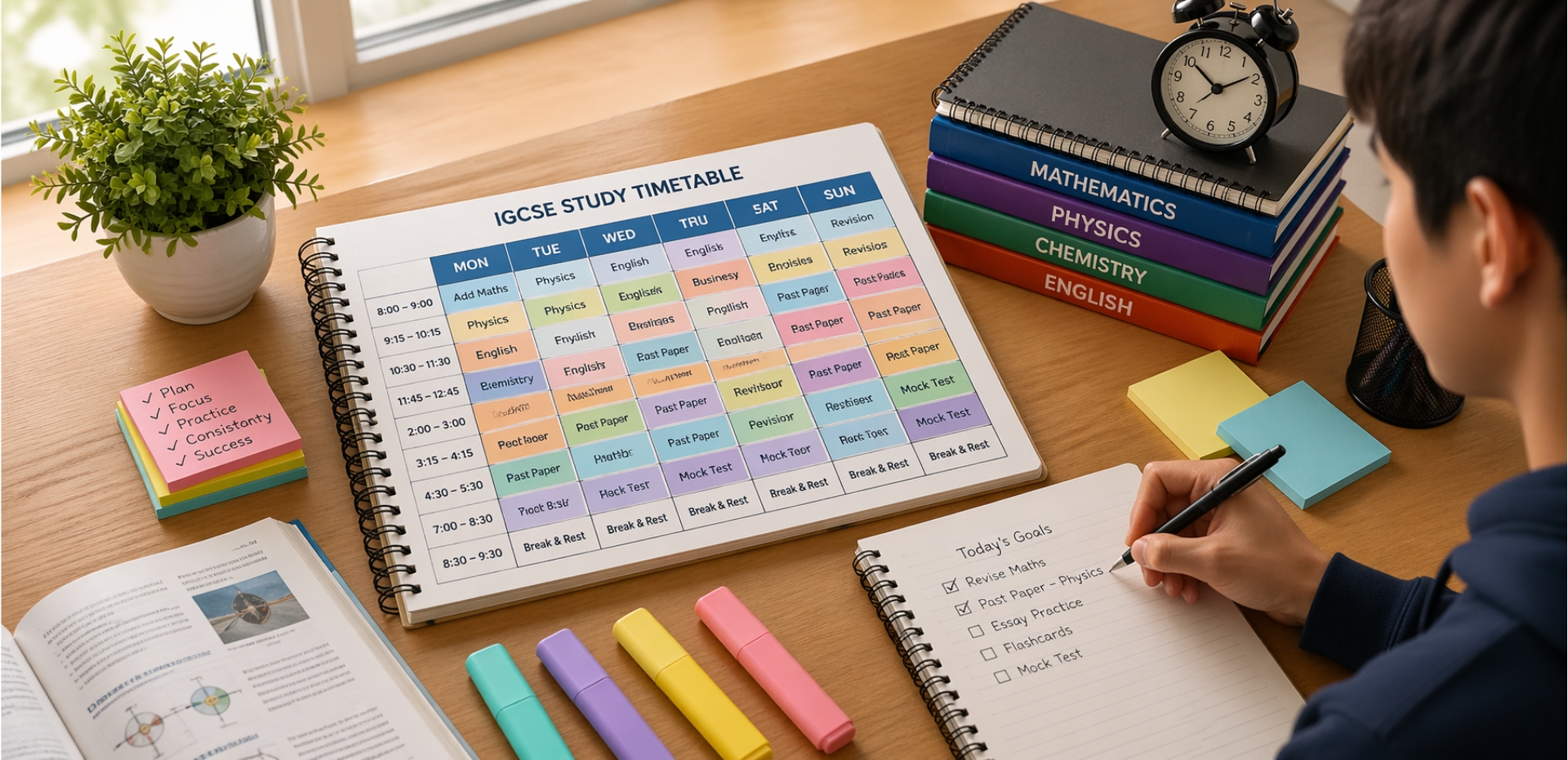
Instructions on the Correct Method of Analysis of IGCSE Past Year Papers
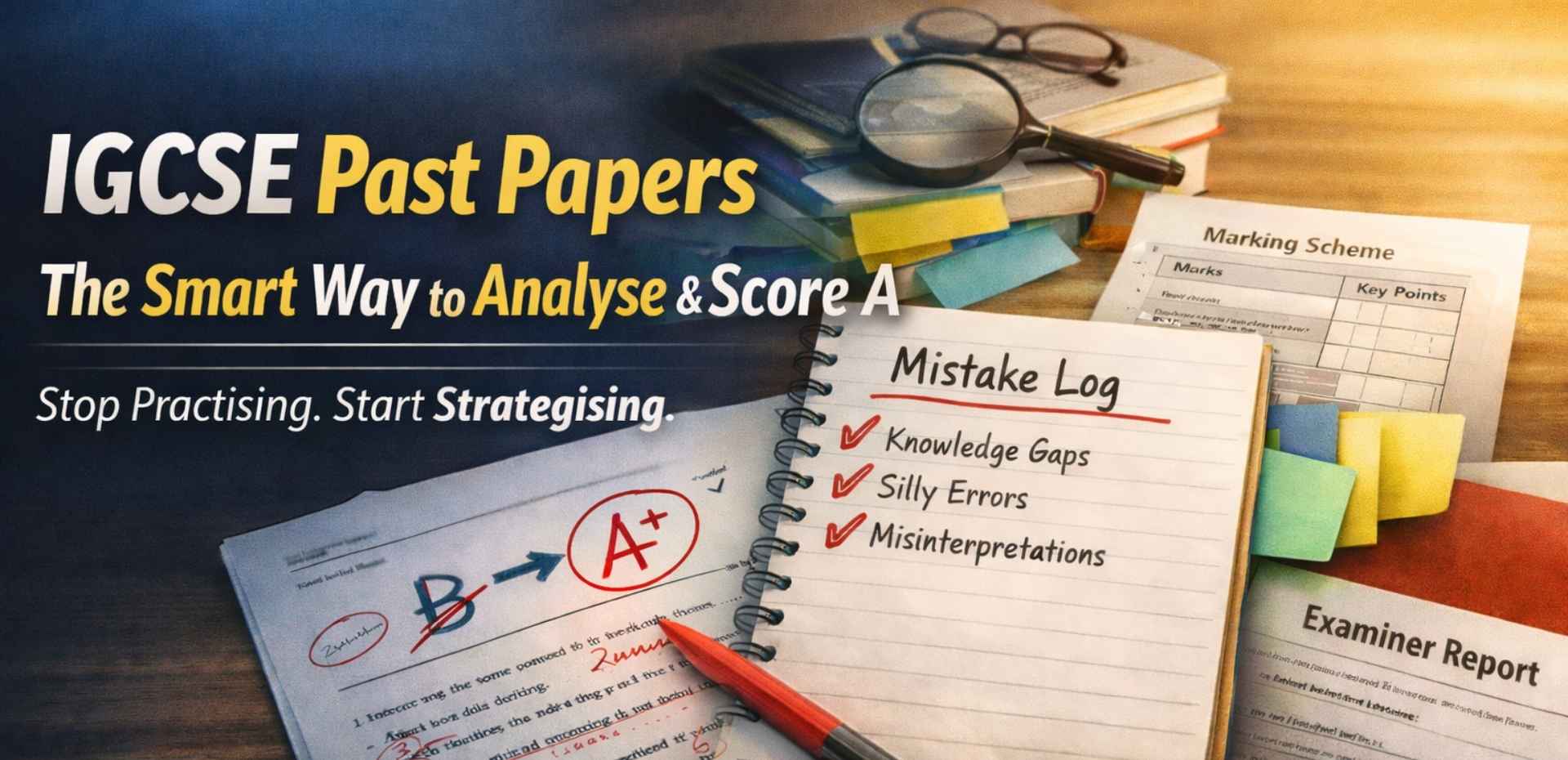
The most common IGCSE students are told the same thing about repeat:
“Simply do more past papers.”
But here is the paradox, some students can do 20 papers and remain at a B, whereas some others only do five and end up with an A.
The difference isn’t effort. It’s method.
Passive practicing is the true trap because you complete papers, check answers and move on without knowing the reasons why marks were lost. To actually be improved, then you have to change your attitude of doing papers to reading IGCSE past-year papers as a strategist, not a student.
This guide will demonstrate how to do so.
Why 100% of Doing Past Papers Is Not Good Enough
Completing a paper tests you. Analysing it teaches you.
Cambridge IGCSE exams are intended to be rewarding, not merely memorisation. It means that two students having the same knowledge may have very different scores— they may know better or worse what the person testing them wants.
When you are just doing papers without example, you are practicing errors. When you are analysing them, you are also improving you performance.
Four Part Guide to The Analysis of Your IGCSE Past Papers
Step 1: Learn to Use the Marking Scheme (Rubric)
The first are the IGCSE marking schemes, which are more or less the blueprint of the examiner.
Just not to check whether your answer is right or wrong. Break it down:
- In which points do the marks go? (e.g. 1 mark formula, 1 for substitution, 1 for final answer)
- What keywords are required?
- What other answers will be accepted?
Above all, know the command words:
- Describe = list clear points
- Elucidate = demonstrate cause and effect
- Evaluate = provide pros and cons and an appropriate conclusion
Begin to tick up every mark point you got like an examiner. You’ll soon find where the marks go.
Step 2: Classify Your Slip-ups
Not all mistakes are equal. When you do not detect the type, you are unable to fix the problem.
All mistakes are either one of the following three categories:
- Knowledge Gaps
You were unfamiliar with the idea, formula, or definition. - Interpretation Errors
You misinterpreted the question or command. - Silly Mistakes
Unprofessional mistakes, such as miscalculations, hastyness, error of omission.
Create a simple mistake log. Patterns will develop, after a time—and those patterns will be your swiftest way to progress.
Step 3: Take Advantage of the Examiner Reports
This is the least recognized tool in Cambridge IGCSE revision methods.
Examiner reports IGCSE are official accounts on how students have performed around the world—and where they have mostly miscarried.
They reveal insights like:
- X and Y are often confused with each other by the candidates
- Answer(s) that scored high had diagrams
- And many would not respond to the command word
Take advantage of these reports. Should thousands of students make the same mistake, now you know what to be wary of.
Consider it insider information—it is.
Step 4: The “Review, Re-learn, Retry” Loop
Here change occurs.
Review
Get to know the areas you scored lowest marks, by subject and by error type.
Re-learn
Refer back to your notes, textbook or tutor. Focus only on the weak areas.
Retry
Repeat, a few days later—or try similar ones.
This cycle makes sure that you are not merely rehearsing, but you are developing.
Five papers using this method will be better than twenty passively doing them. Every time.
Some of the Common Errors That Students Make When Using Past Papers
Most students destroy their own progress even when they are in the right mindset.
- Looking at the marking scheme as you complete the paper
This gives a false sense of security. Always mark after. - Ignoring time limits
Exam technique matters. Apply in the real world. - Only doing recent papers
Older papers still put core concepts and other style of questions to test. Simply make sure they fit into your syllabus. - Equalizing all errors
It is much more serious than losing marks on the parts of the tests which are less popular. Prioritise wisely.
Want Some Additional Assistance in The Decoding of Your IGCSE Exam?
In some cases, it is not a matter of effort, it is a matter of visibility.
Students tend to be blind to their blind spots: repetitive interpretation errors, poor structure, and misinterpretation of command words. And there the professional advice comes in.
In Orient Academy, students are assisted by seasoned experts in their subjects:
- Divide the patterns of mistakes in several papers
- Adjust to actual examiner expectations
- Pay attention to the issues that hike grades
To obtain a tailored strategy, you can subscribe to the ORIENT Workshop Series or request a free academic consultation. In some cases, a grade leap can be opened by a single piece of expertise.
Conclusion
This is the thing: practice does not make perfect, analysed practice makes.
Once you know how to analyse IGCSE past-year papers correctly, you find that every paper is a feedback mechanism, every error is a lesson learned and every revision practice is more focused.
Don’t simply do more as exams approach. Do better.
As those who win are not the best practisers but the fastest learners through their mistakes.