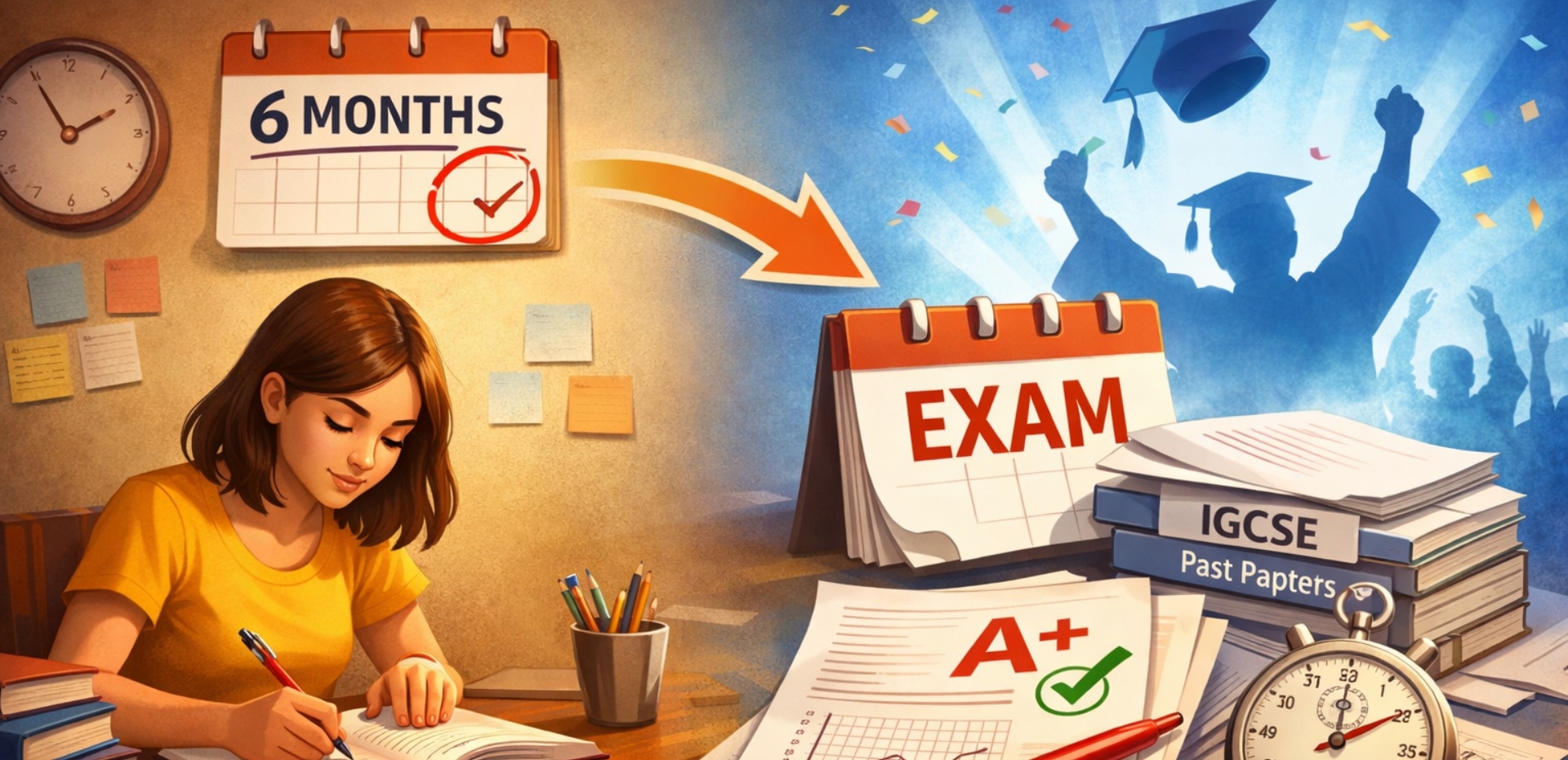
Mock Exams vs Final Exams: A Parent’s Guide
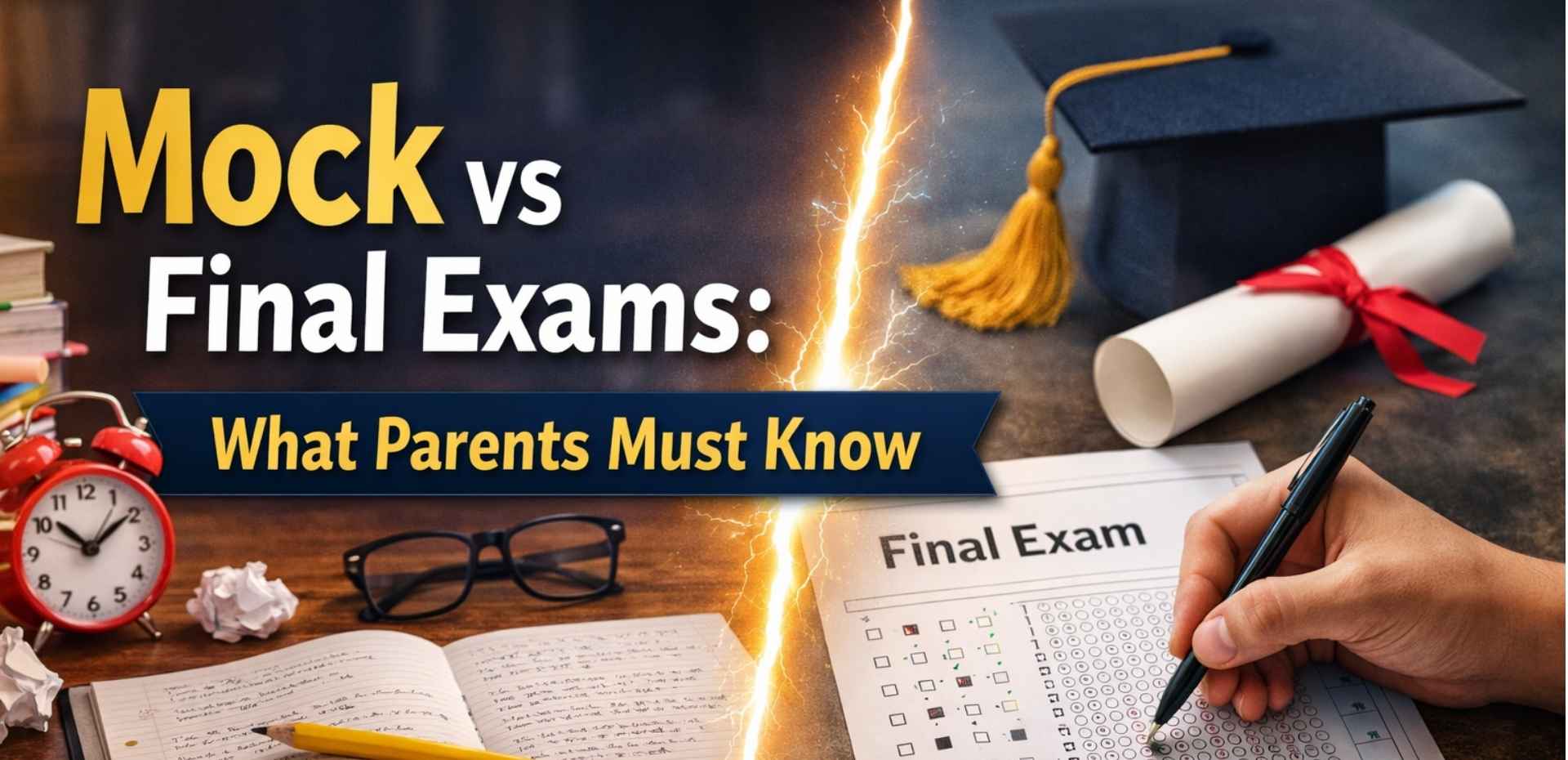
Exam time is awkward in a household.
You can see it in late nights studying. You see it in notes incomplete on the dining room table. In the nagging question, unspoken but prevalent, of “is my child prepared?”
Supposedly, the exams – and mocks that are less than ideal. And now comes the doubt.
The thing that most parents don’t clearly understand is mock exams and final exams are not the same.
Mock exams are practise under pressure. Final exams are evaluation under pressure.
This is the crucial distinction for successfully helping your son or daughter, particularly if they are sitting major exams such as IGCSEs.
The Difference Between Mock Exams and Finals
The Purpose
Mock exams are not designed to reward students. They are meant to expose them.
They identify areas of weakness or misunderstanding and see how your child performs when put under time. Think of them as the practice run – safe (self-imposed) stress testing.
Final exams are the real deal. These are external, assessed exams that determine academic outcomes, results, certificates and future opportunity.
While mock exams are a dress rehearsal, final exams are the performance. There are no retakes. There’s no dress rehearsal.
The Grading and Impact
Mock exams are assessed by schools and teachers. They do not contribute directly to their child’s overall grade, but do contribute to predicted and expected grades.
Final exams are different. They are standardised, externally marked and final. These exams determine university entry, selected subjects and future possibilities.
So while mock exams might be an “unofficial test”, they are extremely important in disguise.
Mock Exams Are Your Child’s Best Friend
Many parents don’t value mock exams as they “don’t count”.
But they may be the most valuable milestone in your child’s education.
Identifying Knowledge Gaps
The place where your child should make mistakes is in their mock exams.
And it’s a good thing.
Rather than the vague dread of “I’m not good at Chemistry”, mocks expose a specific problem, such as not being able to balance chemical equations or interpret graphs, or organise your thoughts.
Knowing the answer turns fear into strategy.
Because you can address problems while the stakes are low.
Mastering Time Management
Knowing the answer is one thing.
Completing the exam on time is another.
But many students fail not because they lack content and skills, but because they cannot manage their time appropriately – spending too long on some tasks, not enough on others, not showing up their real understanding.
Mock exams simulate real exam stress. They teach your child not to linger too long and to think fast on their feet.
This is not only academic, that’s exam intelligence.
Overcoming Exam Anxiety
We’re often afraid of the unknowns.
The quiet of the exam room. The ticking clock. The weight of expectation.
Mock exams remove that unfamiliarity.
Every exam your child takes boosts confidence. Each success breeds confidence. And by then finals become familiar.
And confidence is the key to success.
What to Say to Kids about Mock Exam Results
This is where it’s important.
Because your response may be the catalyst for momentum, or destruction.
If Your Child’s Results Are Lower
First: don’t freak out.
Results are not “the end”. They are a starting point.
Don’t ask, “Why did you get such low marks?”, ask:
“Where are the marks?”
Not understanding? Careless mistakes? Poor time management?
Every mistake is data. Data leads to direction.
Make the result work for you – see what they’re weak on, how they’re studying and offer specific help and support as needed.
If the Results Are Excellent
Celebrate it. Your child has a reason to celebrate.
But don’t get complacent.
Practice papers and real papers aren’t twins. Exam papers can contain new twists, new question types, and increased tensions.
So all in all, the take home message is: well done but not yet done.
Talk about being a diamond in the rough.
8 Ways to Help Your Child with Finals After Mocks
1. Decide on a Revision Plan
What you forget in a night. It’s a gamble.
Support your child to create a revision timetable that is spread over time, with short intense moments of learning each day.
Consistency compounds. Panic doesn’t.
2. Focus on the Feedback, not the Grade
A grade tells you what happened.
Feedback tells you why.
Review your scripts, teachers’ feedback, model answers. Look for common mistakes, misunderstanding, poor answering skills.
Because flashcards are useless. It’s about answering better.
3. Control the Environment
It’s all context.
Diet, rest and mental well-being are more important than you know.
Make room for your child to concentrate, but also relax. Reduce unnecessary pressure. Replace nagging with encouragement.
Relaxation can be stress relief.
4. Look for Academic Help
Areas of weakness can’t be overcome by themselves.
And that’s normal.
Be it past-paper clinics, bridge courses or tutoring, academic support can supplement our efforts and speed up learning, particularly in the lead-up to exams.
It no longer matters how you do it, it matters how you do it.
Conclusion: One is the Loneliest Number
Mock exams aren’t just past-paper exercises.
They are a mirror.
They reflect their current level, potential, and progress.
The final exam may decide their fate, but mocks will decide their path.
So, rather than mocks being a test, think of mocks as a partnership. An opportunity to coach, mentor and fine-tune.
Because when it’s intentional, it’s inevitable.
Want to Close the Gap?
Do you have a child who is failing to close the gap between their mock exam and their desired final grades?
At ORIENT Academy, our subject experts use past-paper workshops and individualised learning plans to help your child learn from their mock exam results and maximise their final results.
Schedule a Free Assessment Consultation now, and arm your child with the vision, confidence and plan to deliver.