Which is better, IGCSE or SPM, for my child?
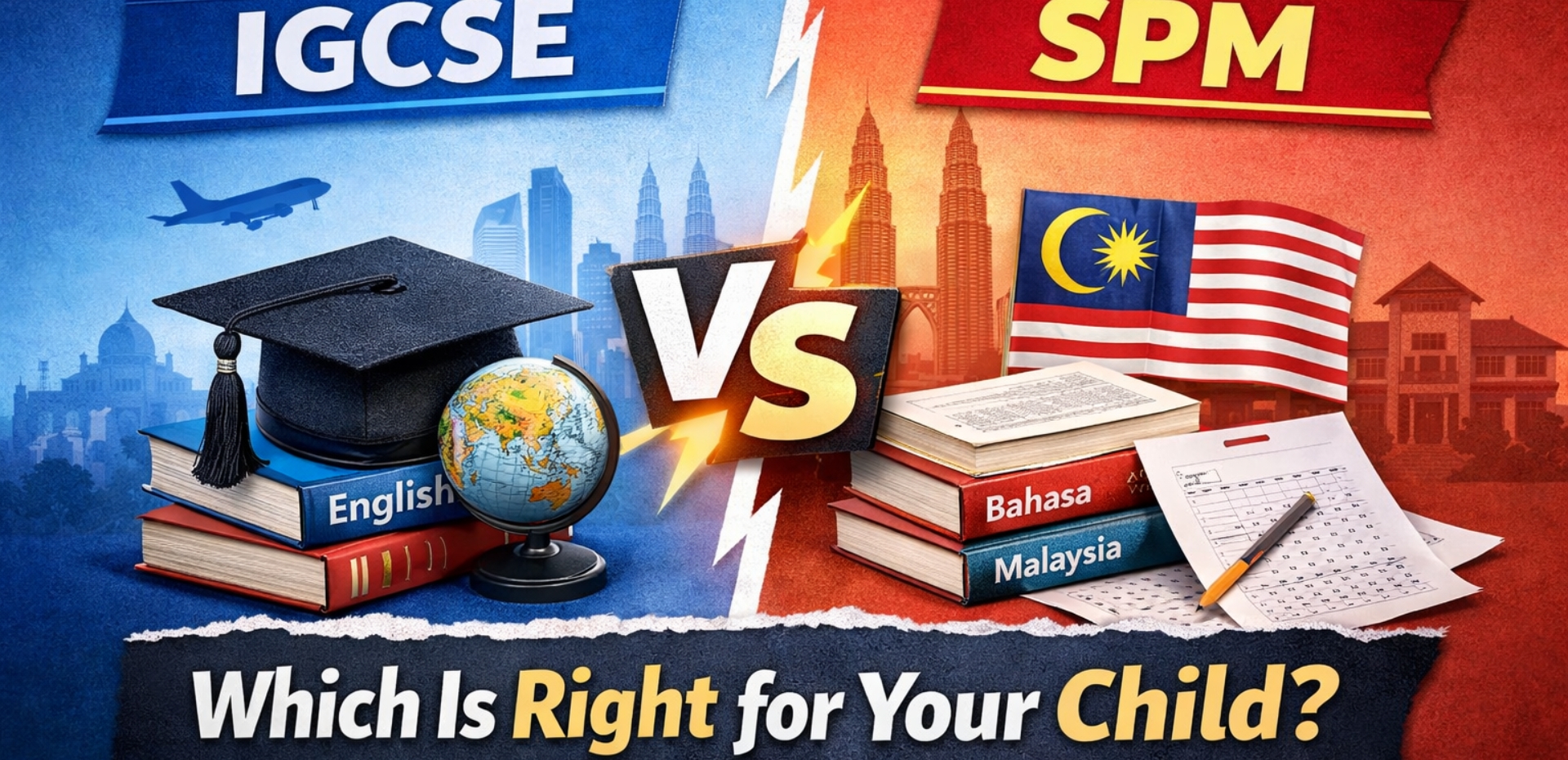
Success is attainable through both avenues, but there are differing structures, styles of learning, and expectations. The right pathway is about more than just what is deemed better. It is about what is better for your child.
This is the first and only guide that enables parents to make a choice tailored to their child’s needs by laying out, in both practicality and clarity, the differences between IGCSE and SPM.
What is SPM?
SPM stands for Sijil Pelajaran Malaysia. It is a secondary exam that is taken by all Malaysian students (regardless of programme) at the end of their form 5 year.
Defining characteristics of the SPM include a centralised national syllabus, a focus on standardised learning and an exam based structure (students are only seen as successful under the system if they pass the national exam). Instruction is primarily in Malay, with the exception of certain subjects.
SPM is accepted by:
- all Malaysian public universities
- local colleges and diploma programmes
What is IGCSE?
IGCSE is an international secondary school qualification provided through Cambridge. The qualification is globally recognised.
Key Characteristics of IGCSE
- Subject-based international syllabus
- Conceptual and application-focused learning
- English as the main medium of instruction
- Flexible subject combinations
IGCSE is recognised by:
- International universities
- Private universities in Malaysia
- A-Levels, IB, foundation and pre-university programmes
IGCSE vs SPM: Key Differences at a Glance
|
Aspect |
IGCSE |
SPM |
|
Curriculum |
International (Cambridge) |
National (Malaysia) |
|
Learning Style |
Conceptual & analytical |
More exam & syllabus-driven |
|
Language |
English |
Mainly Bahasa Malaysia |
|
Assessment |
Subject-based |
Centralised exam |
|
Flexibility |
High |
Limited |
|
Global Recognition |
Very strong |
Primarily local |
Learning Style: Which Suits Your Child?
IGCSE Learning Style
IGCSE suits students who:
- Learn better by understanding concepts
- Are comfortable studying in English
- Prefer smaller classes and personalised pacing
- Can handle subject-based independence
Students are not encouraged to learn by rote memorisation, and are expected to think, explain, and demonstrate application of knowledge.
SPM Learning Style
SPM suits students who:
- Thrive in structured national school systems
- Are comfortable with Bahasa Malaysia
- Prefer a fixed syllabus and uniform pacing
- Perform well in exam-focused environments
SPM offers consistency and familiarity, especially for students already integrated into the national system.
Academic Pressure & Stress Levels
IGCSE
- Pressure is spread across the learning journey
- Internal assessments and coursework help build readiness
- Stress is manageable with proper preparation
SPM
- Heavier pressure concentrated around final exams
- Limited flexibility in pacing
- High competition due to national ranking systems
Stress levels depend more on preparation quality than the syllabus itself.
University and Career Pathways
SPM Pathways:
- Malaysian public universities
- Local private colleges
- Diploma programmes
IGCSE Pathways:
- A-Level programmes
- IB Diploma programmes
- Foundation programmes
- Overseas universities
Both paths open doors to a wide variety of successful careers. The main difference is how and where your child chooses to further their education.
Cost Considerations
SPM:
- Lower cost in government schools
- Overall more affordable
- Bigger class sizes
IGCSE:
- Generally higher cost
- Fees based on subject
- Smaller class sizes with more support
It is important to evaluate cost based on the quality of learning and not just the fee.
Which Is Better for Average Students?
This is one of the biggest misconceptions.
- IGCSE is only for top students. That is false.
Average students have structured support which helps them move.
- IGCSE helps students improve significantly.
- IGCSE and other programmes help students gain confidence.
- SPM and other programmes help students if they align with the structure.
How to Choose the Pathway for Your Child
How does my child learn the best?
Is my child comfortable learning in English?
Does my child need to learn at their own pace?
What are my child’s future education goals?
There is no “better” option. The right option depends on your child.
Is it Possible for Students to Change from the SPM to the IGCSE?
Changes do happen, but need to be supported by:
- A Change in Academic Evaluation
- Bridging or Foundation Assistance
- A Reasonable Level of Anticipation and/or Expectation
Unplanned and carefree switching often results in a high level of anxiety and detrimental academic performance.
Concluding Thoughts IGCSE vs SPM — The Right Choice Is Yours
Both IGCSE and SPM are legitimate and respected academic programmes.
What matters the most is the difference in format or approach to studying, level of adaptability, and the focus on the future.
In your case, if the decision is made based on your child’s level of preparedness or on their needs rather than on social factors, or external pressures, this often leads to the most positive results.
👉 Book an Academic Consultation to determine if your child will be better off in the IGCSE or SPM programme.