What Makes a “Good” IGCSE Teacher? (Most Parents Ask the Wrong Question)
Introduction
When your child enters the IGCSE years, the temperature at home changes.
Conversations shift. Mock exams start. Group chats light up with comparison anxiety. Suddenly, every decision feels high-stakes. And at the centre of it all sits one pressing question:
“How do I find the right IGCSE tutor?”
For many parents navigating IGCSE preparation, the search becomes overwhelming. Degrees, testimonials, A* statistics, the options blur together. Yet despite careful selection, disappointment often follows.
Here’s the uncomfortable truth:
A “good” IGCSE teacher isn’t defined by a wall of certificates. They are defined by how well they understand the highly specific ecosystem of the Cambridge/Edexcel syllabus, and how strategically they prepare students to win within it.
The “Wrong” Questions Parents Usually Ask
Let’s dismantle a few common traps.
“Where did you get your degree?”
It sounds logical. A PhD in Physics must mean excellent teaching, right?
Not necessarily.
Subject expertise does not equal teaching expertise. Explaining quantum mechanics to university students is very different from helping a 15-year-old grasp kinematics for IGCSE. A strong IGCSE tutor must simplify, scaffold, and adapt, not just demonstrate brilliance.
“How many of your students score A*?”
This is seductive but misleading.
Some tutors cherry-pick already high-performing students to protect their success rate. The real metric isn’t how many A*s they produce, it’s value added.
Can they turn a C into an A?
Can they move a struggling student from confusion to clarity?
That’s impact.
“Are you a native English speaker?”
For non-language subjects, this question misses the point.
Accent does not equal teaching ability. What matters more is mastery of the Cambridge or Edexcel mark scheme and the ability to teach exam precision.
The Core Shift: What Makes a Truly Exceptional IGCSE Teacher?
IGCSE is not just a knowledge test. It is an exam technique test disguised as a syllabus.
1. Exam Board Mastery
An exceptional teacher doesn’t just teach “Chemistry.” They teach Cambridge IGCSE Chemistry (0620) or Edexcel IGCSE specifically.
They understand:
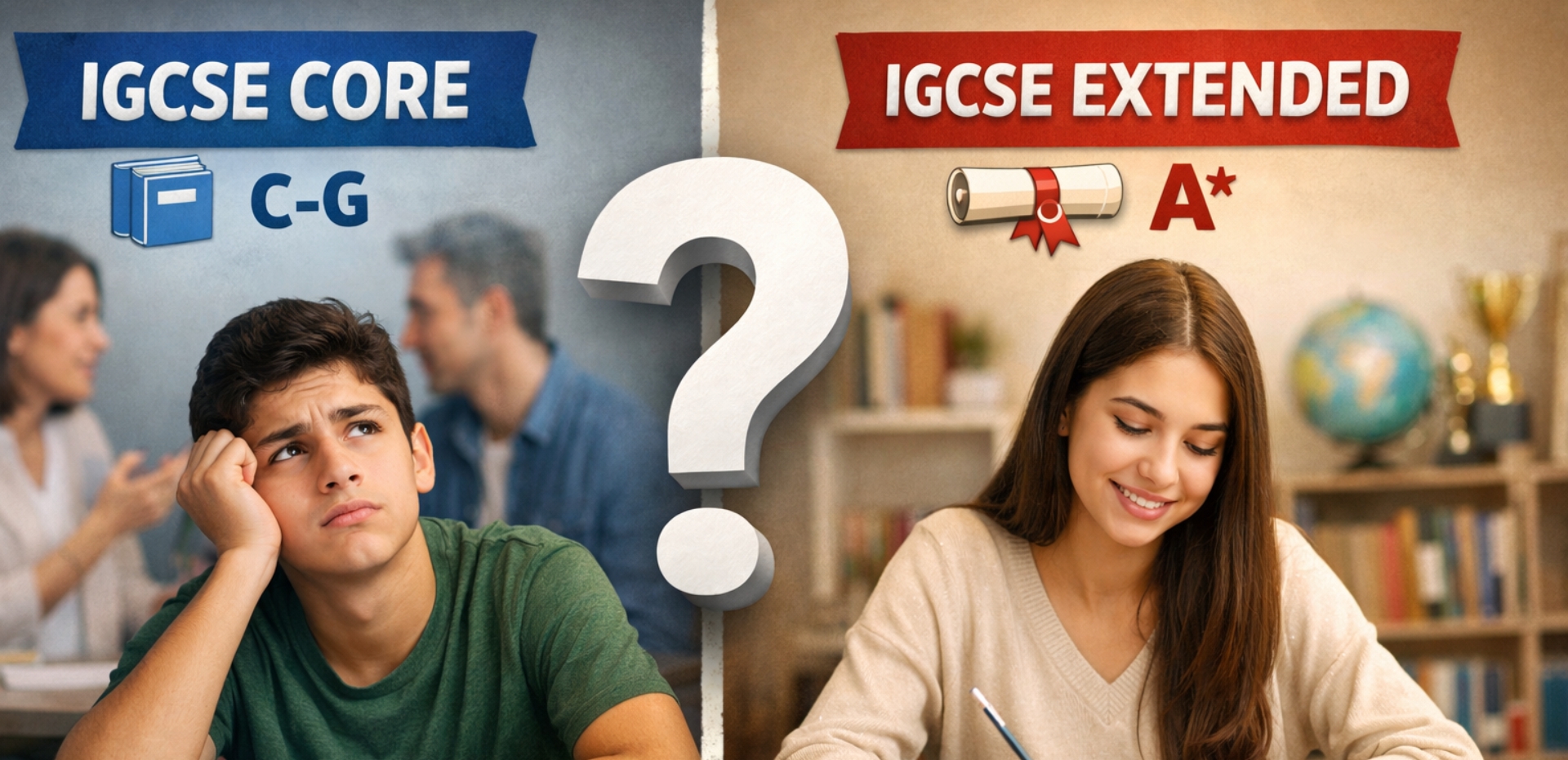
- Core vs. Extended tiers
- Syllabus codes
- Coursework variations
- Paper formats and weightage
Cambridge often emphasises application and structured responses. Edexcel may integrate more practical-style questions. These nuances matter.
2. Fluency in the Marking Scheme
A great teacher thinks like an examiner.
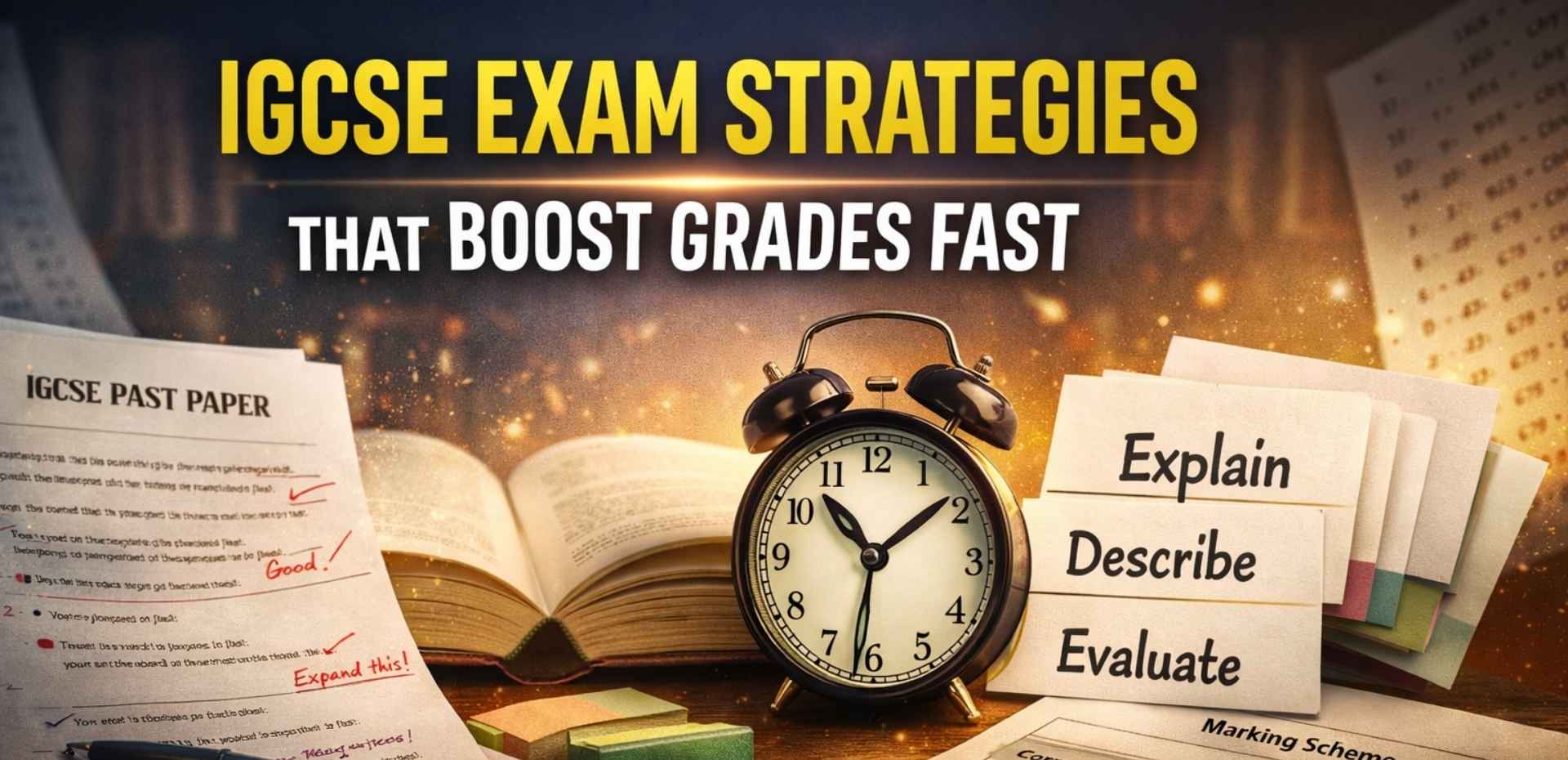
They explicitly train students on command words:
- “Describe” = state facts
- “Explain” = give reasons
- “Evaluate” = judge with evidence
They teach method marks in Math. Units in Physics. Structured logic in Biology essays.
This precision is what separates a B from an A*.
3. Gap Identification and Adaptability
Exceptional tutors diagnose problems instead of repeating content.
Is the issue:
- Weak foundation?
- Careless mistakes?
- Time mismanagement?
- Poor answer structure?
They adapt for visual learners, auditory learners, or students who need hands-on explanation. They pivot, not persist blindly.
4. Past Paper Strategy (Not Just Practice)
Every tutor gives past papers.
But great teachers analyse trends. They teach timing strategy (roughly 1–2 minutes per mark). They categorise mistakes:
- Concept error
- Misreading question
- Structure weakness
And they track patterns systematically.
That’s strategic IGCSE preparation.
5. Emotional Intelligence and Stress Management
IGCSEs are often a student’s first major academic pressure test.
Burnout is real. Panic is common.
A strong teacher doesn’t just push harder, they mentor. They manage exam anxiety, build confidence, and normalise setbacks.
Students perform better when they feel safe and supported.
3 Major Red Flags to Watch Out For
- Over-Reliance on School Textbooks
Textbooks are often broad and outdated. Strong teachers curate concise, exam-focused notes aligned with the syllabus. - One-Size-Fits-All Teaching
If every student receives identical instruction regardless of weakness, that’s a warning sign. - Vague Feedback
“You need to study harder” is not feedback.
“You consistently lose marks on 6-mark evaluation questions because your answers lack comparative analysis”, that’s feedback.
Specificity drives improvement.
The “Right” Questions Parents Should Be Asking
Use this checklist when interviewing a potential IGCSE tutor:
- How do you teach students to interpret the marking scheme?
- Can you explain the difference between Core and Extended tiers for this subject?
- How do you track progress beyond assigning past papers?
- How do you adapt when a student isn’t improving?
- Can you give an example of turning around a struggling student?
These questions reveal strategy, not surface credentials.
Conclusion
A truly “good” IGCSE teacher is not a walking encyclopedia.
- They are a strategist.
- An examiner’s translator.
- A performance coach.
In the world of Cambridge/Edexcel syllabus exams, success is rarely about intelligence alone. It’s about preparation precision.
Because the right teacher doesn’t just teach the subject.
They teach your child how to win the exam.